STUDENT
COURSE
MENTOR
partner
MENTOR
SDG

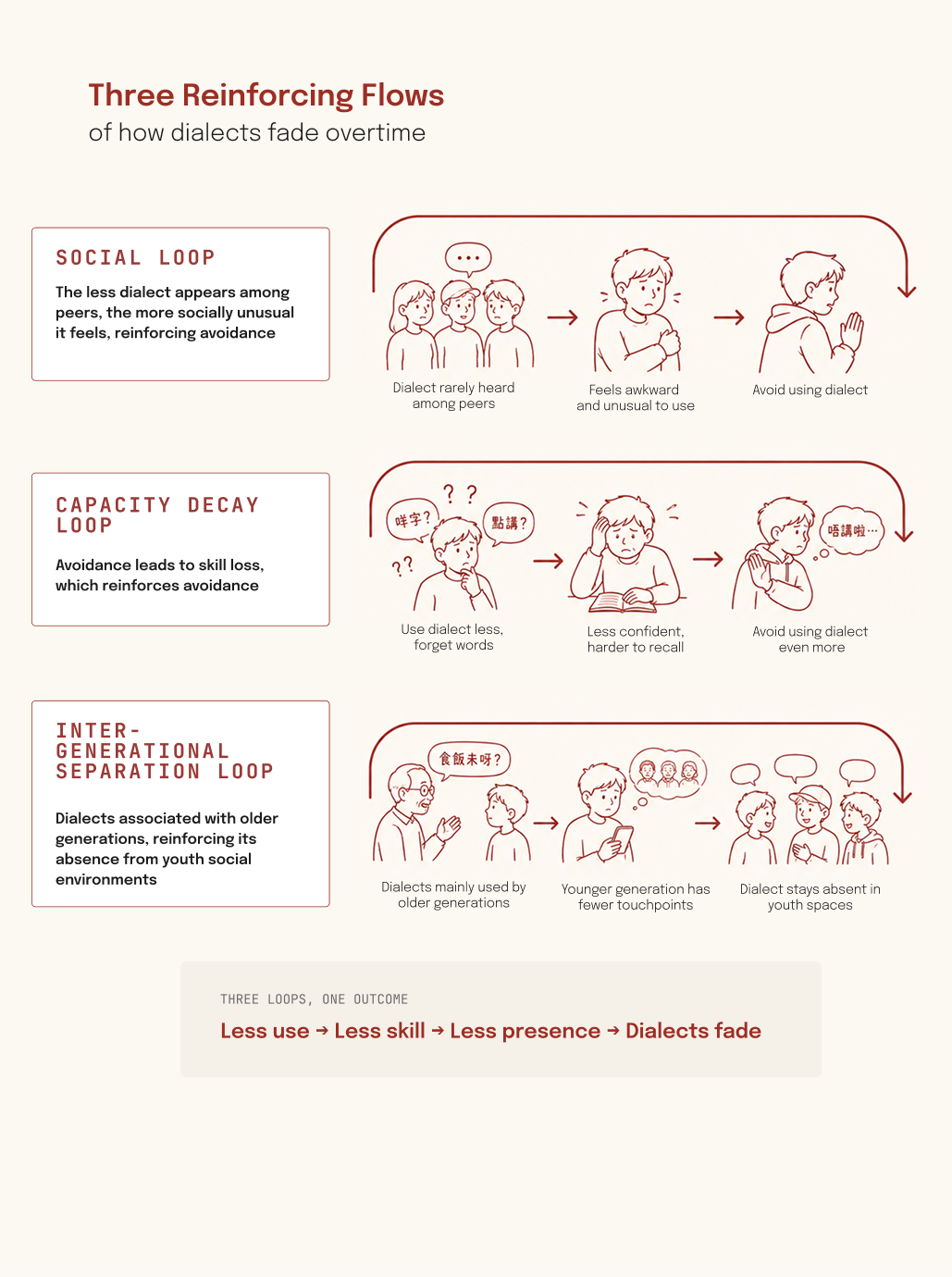
This project examines why young Singaporeans aged 18 to 35 with passive familiarity in Chinese dialects rarely use them in everyday social interaction, despite holding positive attitudes toward them. This group grew up hearing dialects but did not develop active fluency, and their habits will shape whether dialects remain socially viable in the next generation.
The project reframes dialect decline not as a problem of preservation or knowledge, but as a problem of activation. Drawing on behavioural theory and situated within a Systems-Oriented Design (SOD)and Research through Design (RtD) paradigm, it identifies that the barrier to dialect use is not awareness or cultural value, but the absence of interactional conditions that make participation feel socially possible. A behavioural probe conducted prior to interface development provided indicative evidence that dialect use can emerge when permission, collectivity, and approximation are made available within familiar peer environments.
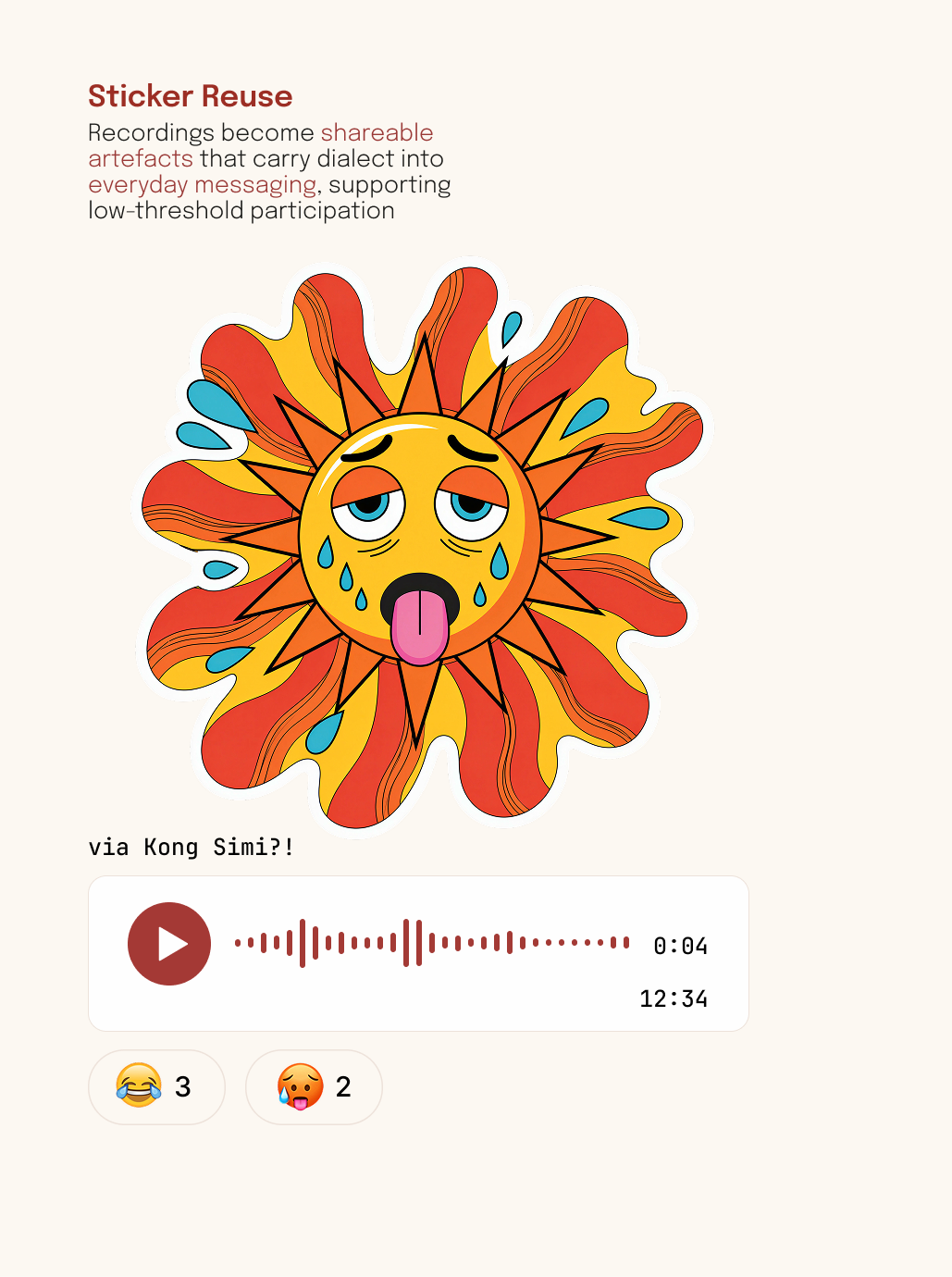
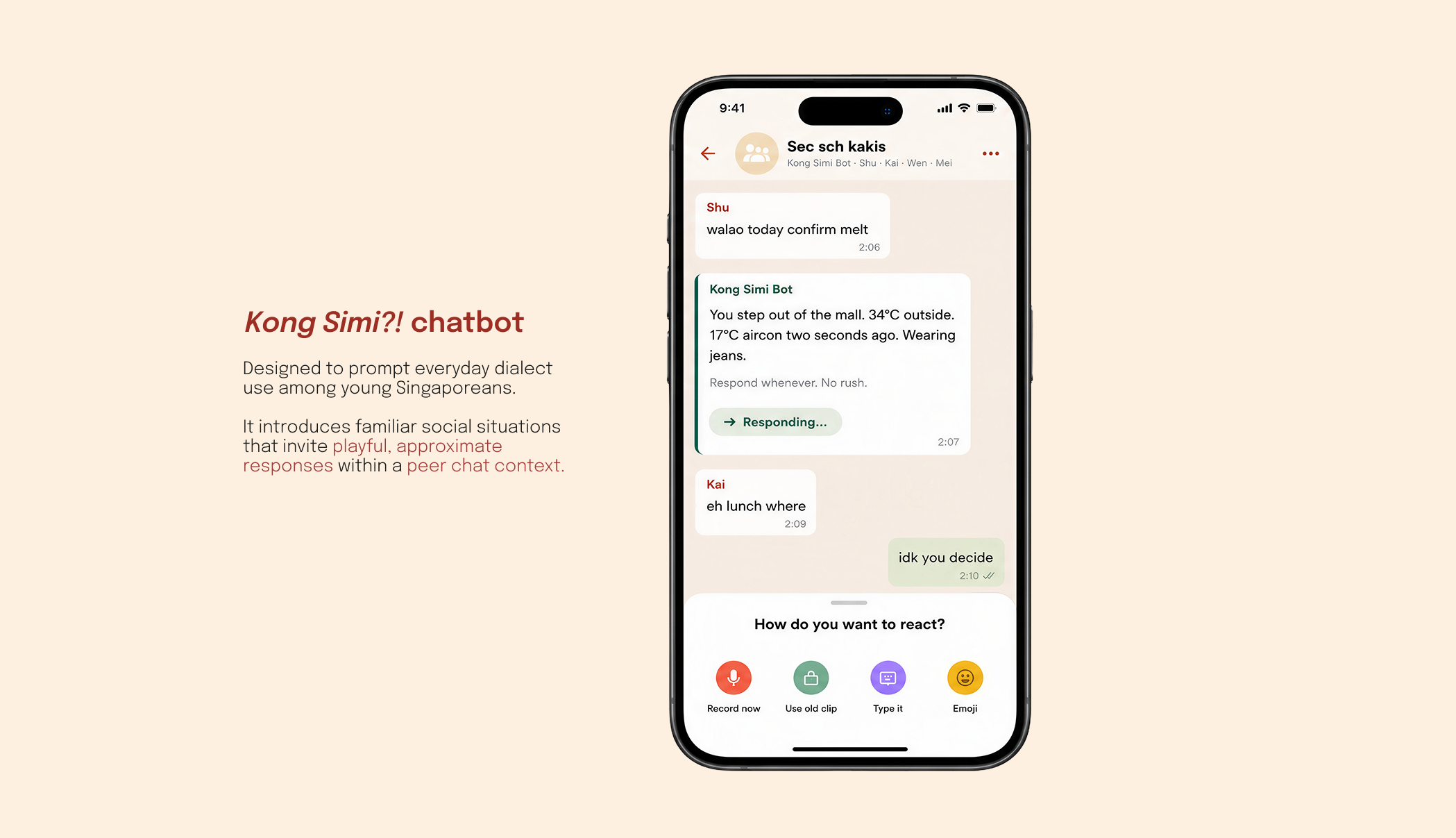
The design response is a two-layer interaction system: a structured, playful, voice-based experience that creates low-risk opportunities for dialect use within peer groups, and an ambient layer through which dialect expressions circulate as shareable artefacts within everyday messaging platforms. The intended effect is not fluency, but a gradual normalisation of dialect use, where small and approximate acts of participation become socially acceptable over time. The project contributes an alternative approach to designing for socially constrained behaviours. One that intervenes not at the level of content, but of context.