STUDENT
COURSE
MENTOR
partner
MENTOR
SDG


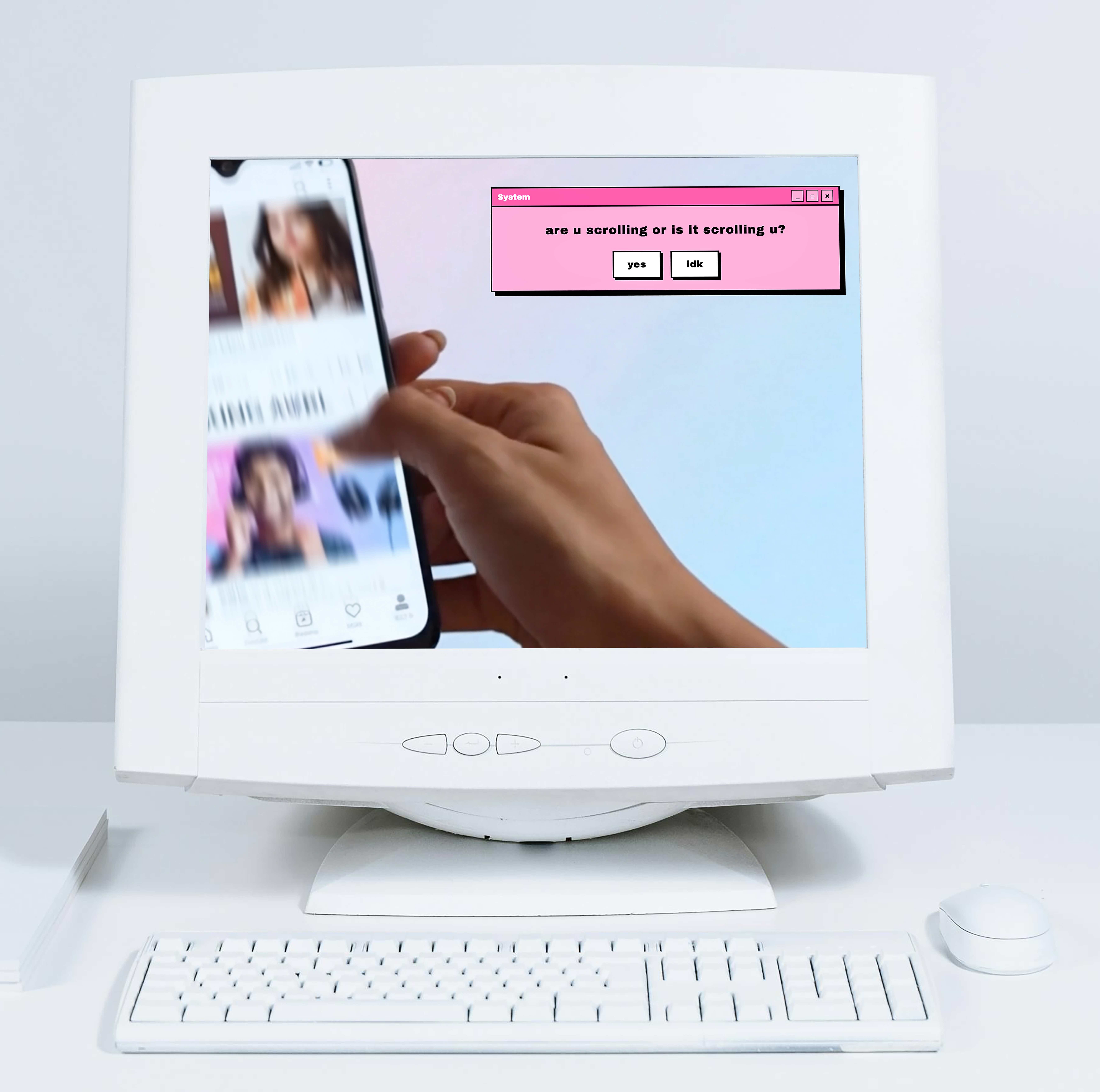
The more you scroll, the less you question. Algorithmic feeds decide what appears and when, rewarding engagement over deliberate attention. Images capture attention faster than text and can make claims feel convincing without conscious effort from the viewer. Generative AI has made it possible to produce photorealistic imagery without a camera or a source, and as synthetic images become harder to distinguish from documentary ones, cynicism and indifference can replace curiosity. Yet media literacy education tends to centre on source verification and text-based critical thinking, while visual literacy is seldom treated as a separate competency. Viewers need the skill to pause, the will to question, and a sense of their own agency.
This thesis asks how interaction design can support visual literacy among Estonian students aged 14 to 17. Using a Research Through Design approach, the project combines expert interviews, a digital diary study, and co-design workshops in which participants generated and manipulated images using AI tools, seeing how their choices shaped what an image could mean. Image-making is treated as integral to visual literacy.
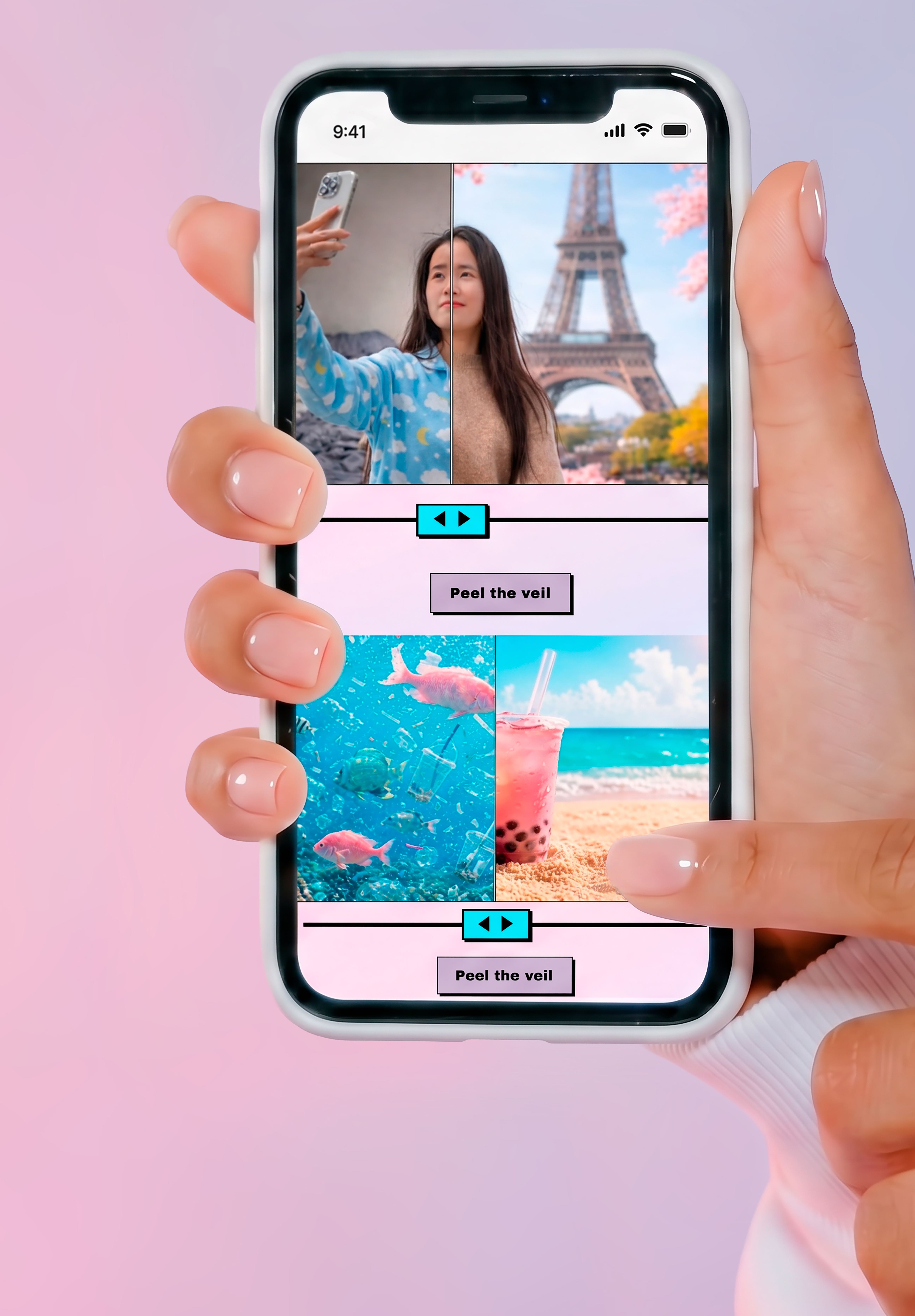
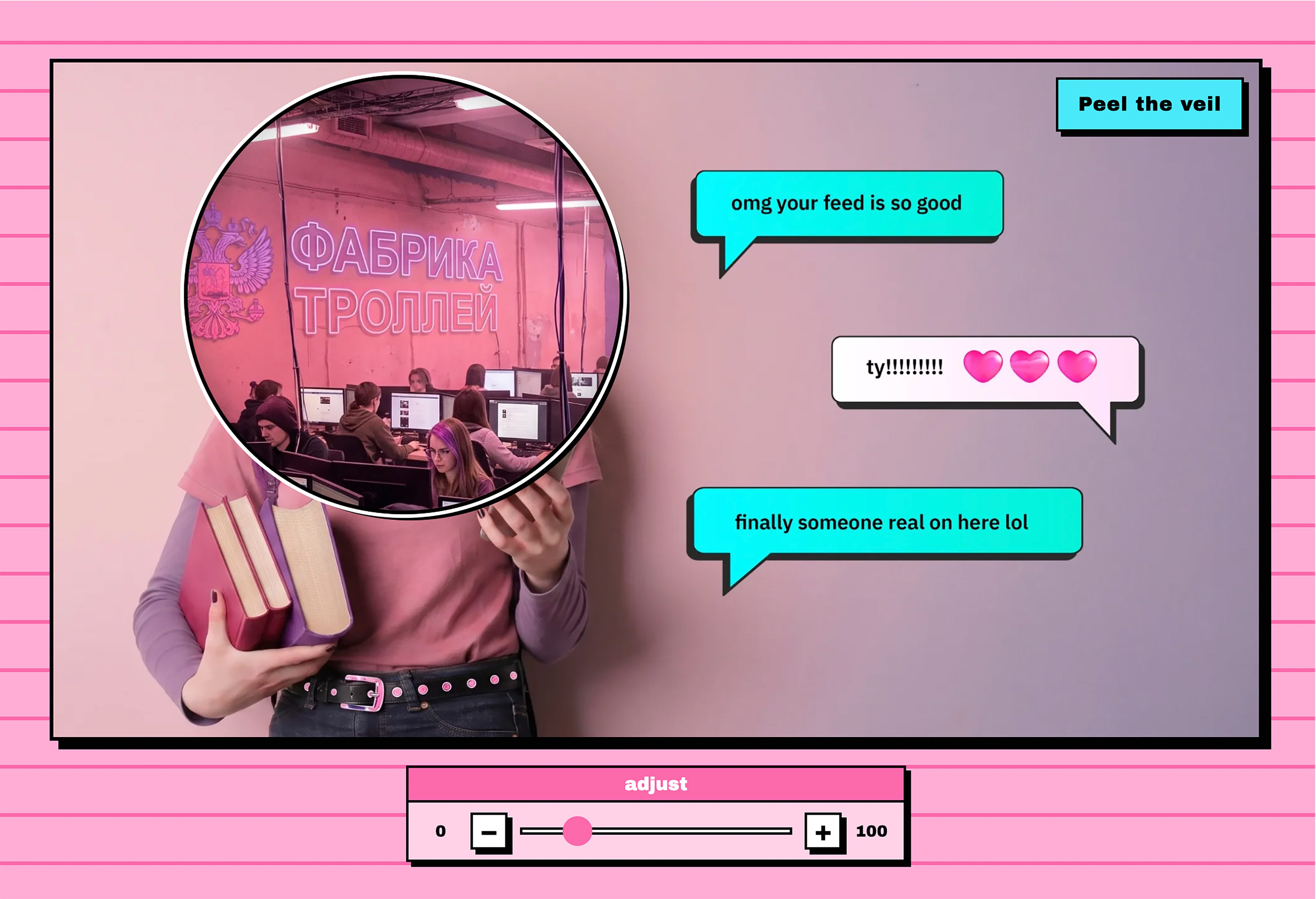
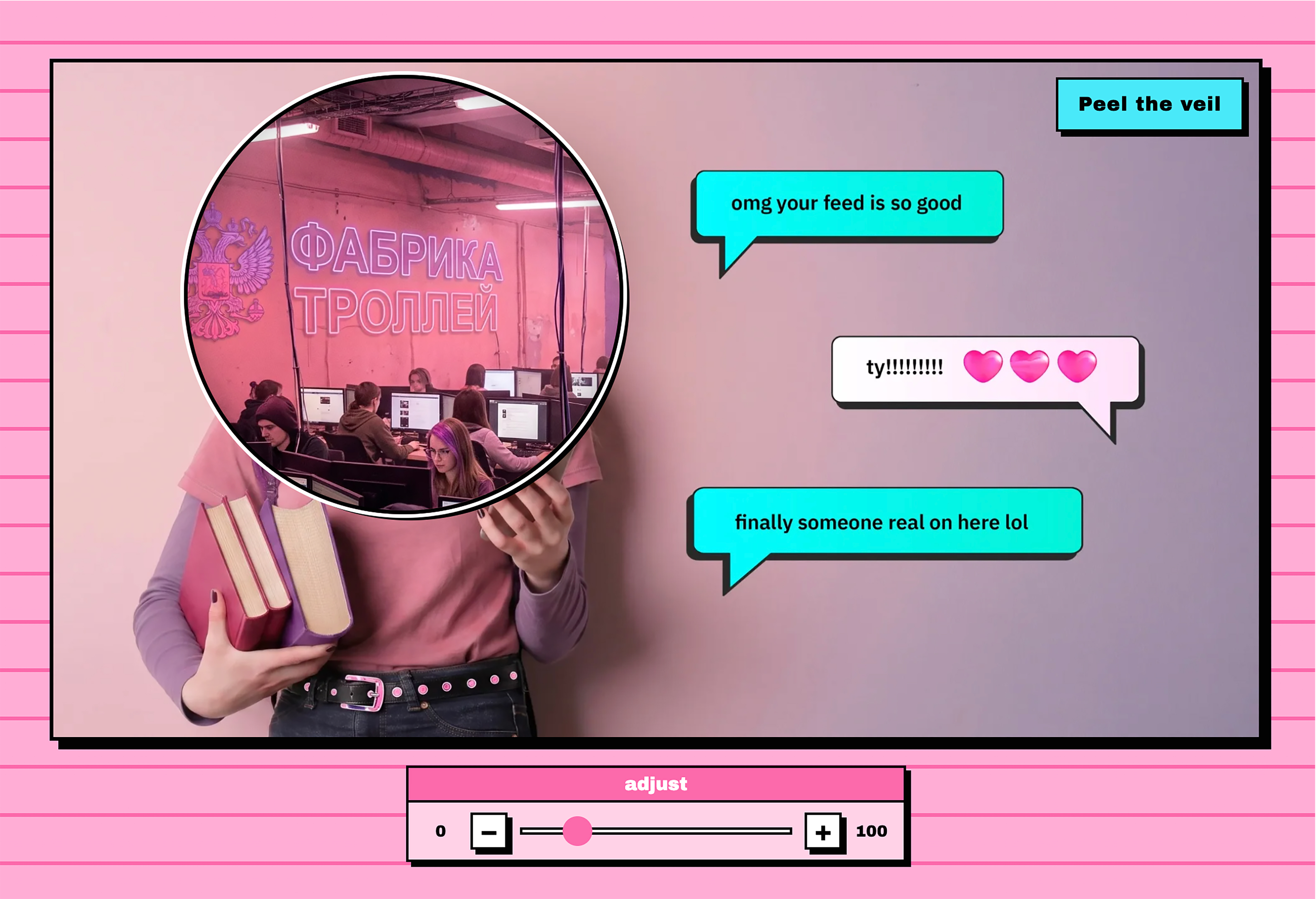
The outcome is a web-based interactive gallery built from layered images. Users see one image, then reveal what is underneath: the original, the manipulation, the process. The tool does not test knowledge or tell users what to think. It creates a starting point for looking again and talking about it.
These are complex and still evolving issues, and no single tool can resolve them. But small, classroom-ready formats can make a difference. The prototype is an attempt to bring visual media into classroom conversation, to make reflection on media use an everyday practice, and to offer teachers a structure for opening that discussion in a visual language young people recognise. The thesis argues that visual literacy begins when looking becomes intentional, when viewers see themselves not as passive recipients but as interpreters. Without visual literacy, digital literacy remains incomplete, and both are increasingly tied to civic competence.